
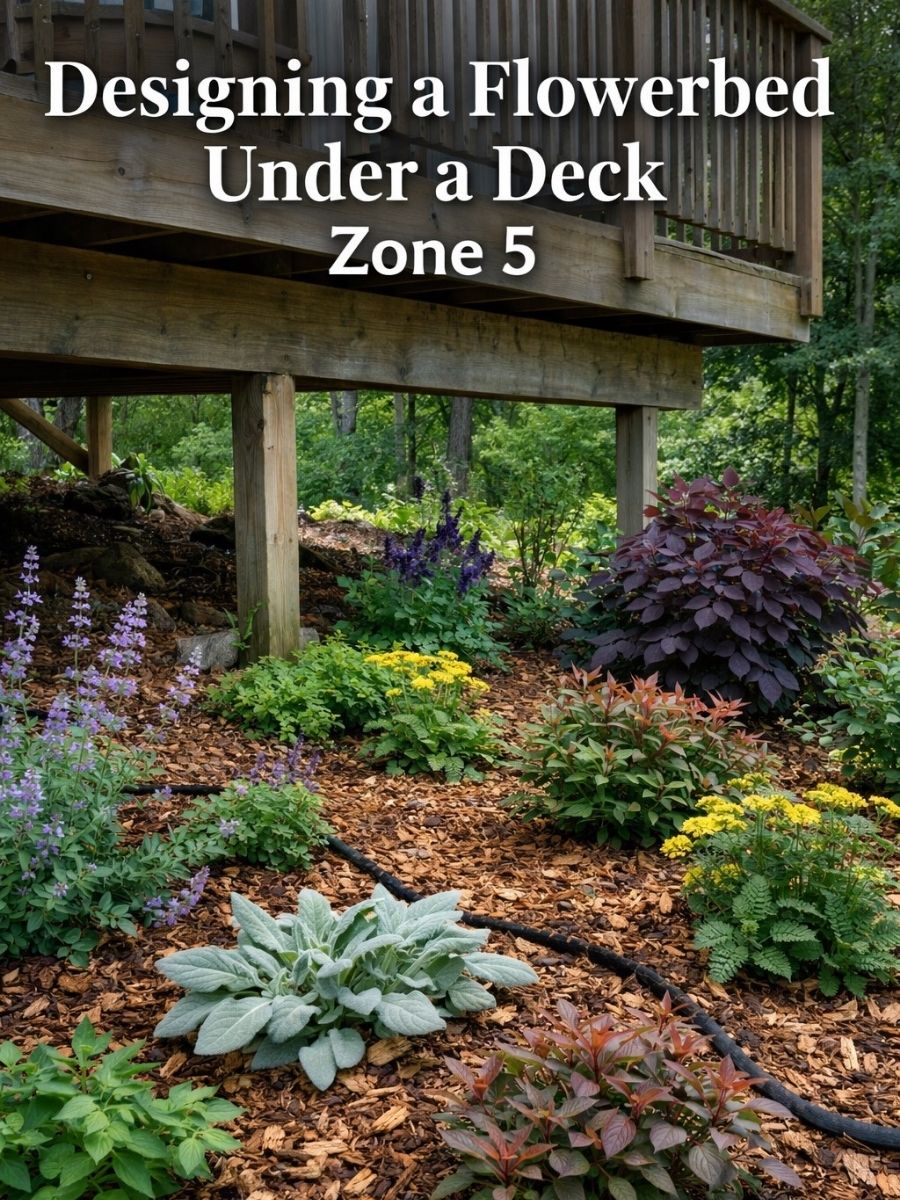
Designing a flower bed under a deck in Zone 5 comes with unique challenges, especially in regions that experience heavy snowfall and long winters. With the right plant selection, thoughtful spacing, and low-maintenance preparation, an under-deck garden can become a resilient and beautiful part of your landscape.
This project was designed last winter and planted during the growing season, with a focus on durability, low maintenance, and long-term growth in a snowy environment.
Why Designing a Flower Bed Under a Deck in Zone 5 Requires Special Planning

Under-deck garden beds are exposed to heavy snow accumulation and frequent snow shoveling, which makes planting shrubs and evergreens risky. Over time, the weight of snow can snap branches, crush plants, and undo years of growth.
For this reason, I avoided planting fragile woody plants directly beneath the deck and instead focused on:
- Perennials that die back naturally
- Plants that tolerate occasional snow runoff
- Flexible growth habits that won’t break under pressure
- A layout that allows the garden to mature gracefully over time
How to Prepare a Garden Bed Under a Deck Using the Cardboard Method

To prepare the area, I used the cardboard sheet-mulching method, which is an effective, chemical-free way to suppress weeds and grass.
Benefits of Sheet Mulching for Weed Control
Sheet mulching is a simple, effective method for preparing a new garden bed under a deck, especially in Zone 5 where minimizing soil disturbance helps protect long-term soil health. This approach suppresses existing weeds while creating a healthier growing environment for perennials.
To apply the sheet mulching method:
- Lay plain, non-coated cardboard directly over existing grass or weeds
- Cut planting holes in the cardboard where each plant will be installed
- Plant directly through the cardboard into the soil below
- Cover the entire area with a generous layer of mulch, with wood chips working especially well
Over time, the cardboard naturally breaks down, improving soil structure and increasing organic matter. This method saves time during bed preparation, reduces weed pressure, and minimizes the need for ongoing maintenance.
Note: Some aggressive plants, such as spiderwort, may still push through the cardboard. These persistent weeds should be removed manually and monitored regularly to prevent them from becoming established.
Garden Size and Planning Considerations
This garden bed is approximately 14 feet deep and may expand in the future. Because of its size, I relied mostly on plants I had already grown in my small backyard nursery, supplementing with a few locally sourced plants to keep costs manageable.
Spacing was planned carefully using a pre-designed layout, allowing each plant room to reach its mature size without overcrowding.
Choosing Perennials That Can Handle Snow and Seasonal Dieback
Front of the Border (Low-Growing, Drought-Tolerant)
- Height: ~18 inches
- Width: ~12 inches
- Ideal for edging
- Prefers drying out between watering
Lamb’s Ear (Stachys byzantina)
- Soft, textured foliage
- Handles dry conditions well
- Easy to clean up after winter
These plants pair well together due to similar water needs.
Mid-Layer Plants (Structure and Color)
Penstemon (Variegated Variety)
- Used as a substitute for white phlox
- Purchased locally from another gardener
- Slight red leaf margins add visual interest
- Dotted throughout the bed
- Adds summer blooms and pollinator value
- Width: 12-18 inches
- Height: 36–48 inches
- First-year plant
- Tall bloom spikes bring vertical interest
Larger Perennials and Statement Plants
Hardy Hibiscus ‘Edge of Night’
- Grows ~4–4.5 ft wide and ~3.5 ft tall
- Prefers slightly more water
- Positioned closer to snow runoff areas
Baptisia australis (False Blue Indigo)
- Grown from seed
- Slow to establish (2–3 years)
- Long-lived and low maintenance once mature
Achillea ‘Golden Parker’ (Yarrow)
- Drought tolerant
- Four plants spaced throughout
Shrubs for Privacy and Long-Term Structure
Purple Smoke Bush (Cotinus)
- Planned as a privacy screen
- Can reach 10–15+ feet tall if left unpruned
- Flexible pruning allows shrub or small tree form
- May require winter protection near snow zones
Lilac (Previously Transplanted)
- Still establishing
- Minimal watering during the first year
- Will be shaped and thinned in future seasons
Butterfly and Pollinator Plants
Perennial Verbena
- Trial plants grown from seed
- Being evaluated before adding to nursery offerings
Pugster® Butterfly Bush (Periwinkle)
- Compact: ~2 ft tall and wide
- Blooms continuously with deadheading
- Cut back to the ground each early spring in Zone 5
- Planted farther from heavy snow impact areas
Plant Spacing and Layout for Long-Term Growth

When designing a flower bed under a deck in Zone 5, proper plant spacing is essential for both plant health and long-term ease of maintenance. While new perennials may look small at planting time, most will expand significantly over the course of two to three growing seasons. Allowing adequate space from the beginning reduces overcrowding, improves air circulation, and helps prevent disease in the damp, shaded conditions often found beneath a deck.
Start by placing taller or wider plants toward the back of the bed, closer to the deck supports, and gradually transition to lower-growing perennials near the edge. This layered layout creates a natural flow and ensures that each plant receives enough light without competing for space. Spacing plants according to their mature size may feel sparse at first, but it allows roots to establish deeply and encourages stronger, more resilient growth over time.
In snowy climates, leaving room between plants also helps protect crowns during freeze-thaw cycles and makes seasonal cleanup easier. A thoughtfully spaced garden may take patience in its early stages, but it will reward you with a healthier, fuller, and more peaceful landscape as the garden matures.
Installing Drip Irrigation in an Under-Deck Flowerbed

After planting approximately 50 plants, I installed a drip irrigation system in our under-deck flowerbed using tubing with emitters spaced every 18 inches.
Irrigation Setup Highlights:
- Connected to an existing irrigation line
- Timed to run for ~40 minutes per cycle
- Waters this bed, the butterfly garden, and the kids’ garden
- Ensures deep, consistent watering without waste
This setup is especially helpful during busy seasons and helps young plants establish strong root systems.
Mulching and Ongoing Maintenance in Cold Climates
Mulching plays a critical role in maintaining a healthy flower bed under a deck, especially in cold climates like Zone 5 where soil is exposed to freeze-thaw cycles. While free wood chips from services like ChipDrop can be a cost-effective option, availability may vary by region and season. If wood chips are not accessible, purchasing untreated wood mulch or planning to revisit free options in the following year are both practical alternatives.
A consistent layer of mulch helps protect plant roots throughout winter and supports long-term garden health by:
- Improving soil moisture retention
- Suppressing weed growth
- Regulating soil temperature
- Giving the garden a finished, cohesive appearance
In under-deck garden beds, mulch also helps reduce soil compaction from snow melt and foot traffic while minimizing ongoing maintenance during the growing season. Replenishing mulch annually ensures continued protection and keeps the garden bed looking well cared for year after year.
Looking Ahead: What This Garden Will Become
Right now, the bed looks sparse—and that’s okay. Perennial gardens take time. Over the next few seasons, plants will:
- Fill in the space naturally
- Require less maintenance
- Create privacy and visual balance
- Offer blooms from spring through fall
With patience, this garden will mature into a layered, peaceful space that works with our climate instead of against it.
What to Expect as Your Under-Deck Garden Matures
Designing a flower bed under a deck in a snowy Zone 5 climate is a gradual process that rewards patience and thoughtful planning. In the first year, plants focus on root development and may appear smaller or less full than expected. Over time, as soil health improves and perennials become established, the garden will grow stronger, fuller, and more balanced with each passing season.
With careful plant selection, proper spacing, and consistent watering through a simple irrigation system, an under-deck garden can become a resilient, low-maintenance space that adapts naturally to cold winters and changing conditions. Year after year, the landscape will require less intervention while offering increasing beauty and structure.
If you’d like to continue learning about garden bed design, plant spacing, or selecting the right perennials for your growing zone, explore these related articles for additional guidance and inspiration.



Be the first to reply